
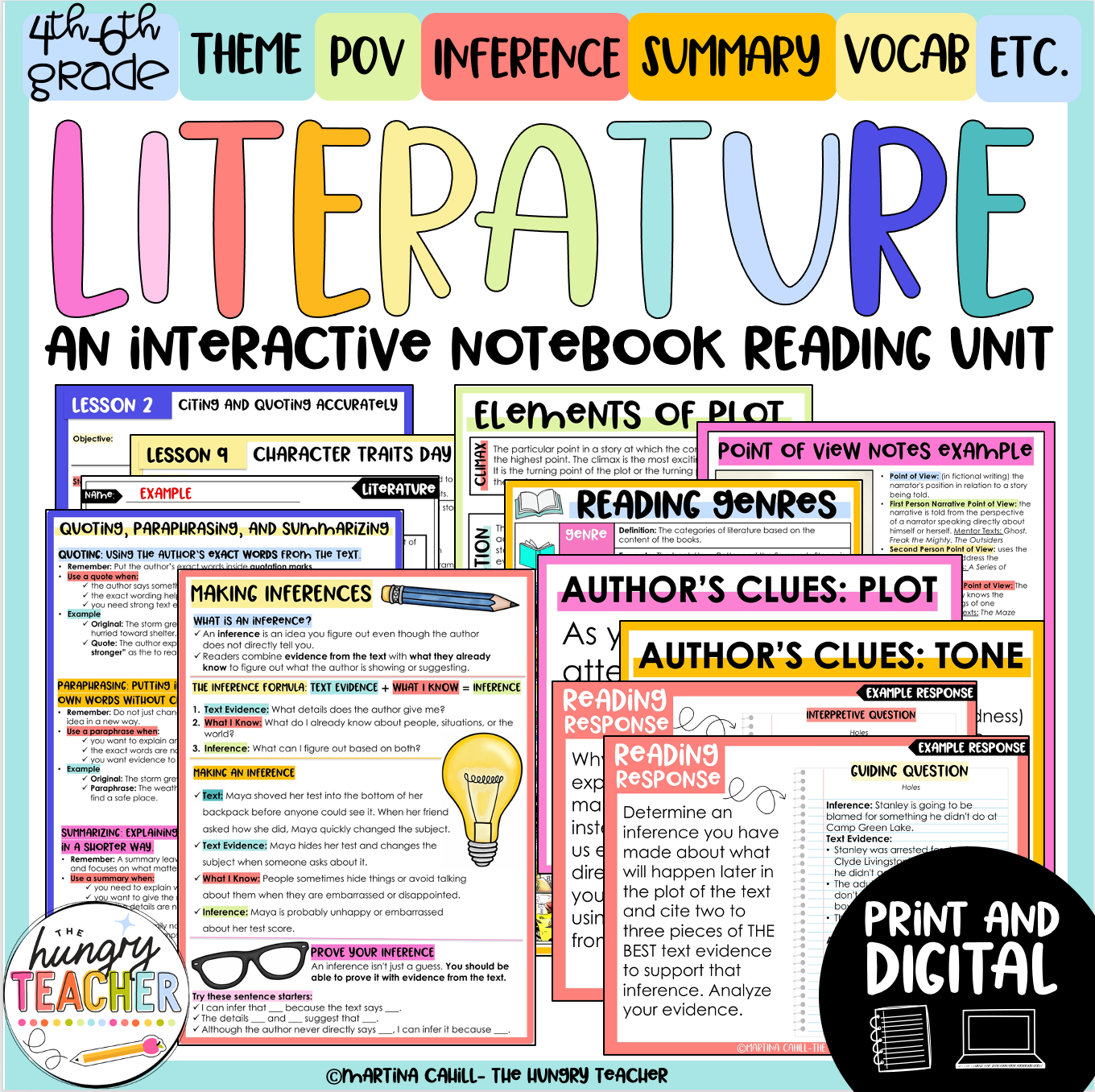
Upper Elementary Interactive Reading Literature Unit (4th-6th)
Teaching literature and reading comprehension in 4th, 5th, and 6th grade has never been easier with this complete 24-lesson Literature Interactive Notebook Reading Unit. This upper elementary and middle school literature unit includes 24 done-for-you lesson plans, teaching slides for every lesson, interactive notebook activities, literature reference pages, reading response questions, teacher examples, answer keys, printable resources, and digital resources for teaching essential reading literature standards in 4th, 5th, and 6th grade ELA.

Teach theme, inference, text evidence, summarizing, character analysis, plot, context clues, figurative language, mood and tone, point of view, author's craft, genres, poetry, drama, traditional literature, Greek mythology, and more—all in one scaffolded literature unit. Use the lessons with Holes as modeled throughout the unit, pair them with another whole-class novel, or use them with the literature your students are already reading.
This 4th–6th grade literature unit gives you an actual plan for teaching reading standards instead of a folder full of disconnected worksheets and activities.
A Complete Literature Unit You Can Actually Teach
Instead of teaching a reading skill one day, handing students a worksheet, and moving on to something completely different the next day, these 24 lessons build students' reading and analytical thinking one skill at a time.
Students learn the skill through explicit instruction and teacher modeling, see it applied to authentic literature, and then have opportunities to use that same thinking while reading.
The first 20 lessons are designed to work alongside almost any class novel or literature text. Holes is used throughout the teacher materials to show you exactly what the lesson can look like with a real novel, but you are not locked into teaching Holes. Teach the lesson, model the skill with your class text, and then have students apply that skill to their own reading.
The final four lessons provide focused instruction with poetry, drama, traditional literature, and Greek mythology, giving students explicit practice with standards that may not naturally come up in every class novel.
Here's What You'll Get:
- 24 complete, step-by-step literature lesson plans
- Ready-to-teach presentation slides for every lesson
- Interactive notebook activities and examples
- Student literature reference pages
- Guiding Questions for comprehension and skill application
- Interpretive Questions for deeper thinking, writing, and discussion
- Teacher example responses for every reading response
- Completed examples and answer keys
- Printable and digital student resources
- Standards alignment for 4th, 5th, and 6th grade Reading Literature standards
- Implementation support and pacing suggestions
- Opportunities to apply skills to class novels, authentic texts, and independent reading
Each lesson intentionally combines direct instruction with application. Students aren't simply identifying a literary element on a worksheet—they're learning how to notice it, understand it, support their thinking with evidence, and explain what it contributes to the text. The included Guiding and Interpretive Questions give students repeated opportunities to move from comprehension into deeper analysis.
Use This Literature Unit With Almost Any Novel
You do not have to purchase or teach one specific novel to use this unit.
The teacher examples throughout the unit use Holes by Louis Sachar to show what each skill looks like when applied to an actual class novel. You can follow that model with Holes or use the same lessons with another novel or text already required by your school.
This makes the unit especially helpful if you want to teach a whole-class novel without turning the novel study into chapter questions, packets, and activities that only work with that one book.
Instead, the novel becomes the place where you teach students how to read literature—and students can take those same skills into the next book they read.
Students Don't Just Answer Questions—They Learn to Think About Literature
Each lesson includes Guiding Questions that help students apply the day's reading skill and Interpretive Questions that push their thinking further through writing and discussion.
Students repeatedly practice supporting their ideas with details and evidence from the text, explaining their thinking, discussing different interpretations, and applying what they've learned to authentic reading.
That means you aren't searching for a new reading activity every day just to say you "covered" another standard.
You teach the skill. You model the thinking. Students practice it with real literature. Then they use it again and again until they can do more of that thinking independently.
The 24 Literature Lessons Are:
- Reading Complex Texts
- Quoting and Citing Accurately
- Making Inferences: Part 1
- Making Inferences: Part 2
- Theme: Part 1
- Theme: Part 2
- Summarizing
- Character Traits: Part 1
- Character Traits: Part 2
- Plot
- Vocabulary and Context Clues
- Figurative Language: Part 1
- Figurative Language: Part 2
- Tone and Mood
- Point of View
- Point of View Influence
- Author's Craft
- Different Genres of Texts
- Multimedia: Comparing Reading and Audio
- Multimedia: Comparing Reading and Video
- Poetry Structures
- Drama Structures
- Traditional Literature
- Greek Mythology
The lessons intentionally align across the 4th, 5th, and 6th grade Reading Literature standards, so the level of thinking can grow with your students rather than requiring three completely different reading units.
Perfect for:
- 4th grade ELA
- 5th grade ELA
- 6th grade ELA
- Literature units
- Reading comprehension instruction
- Whole-class novel studies
- Interactive notebooks
- Independent reading
- Reading workshop
- Homeschool ELA
- Multi-grade ELA classrooms
- Teachers who need to cover literature standards without creating a separate activity for every single one
Effortless Preparation
Everything is designed to make this unit easy to actually implement.
Prep is quick and easy. Review the lesson plan, display the included teaching slides, print or assign the interactive notebook/reference pages, grab your class text, and teach.
Each lesson tells you what to teach, what students need, how to model the skill, what students should think about while reading, and how to close the lesson. The included teacher examples and answer keys mean you aren't having to create your own model response before class.
The implementation guide also walks you through pacing, class novels, independent reading, and how the different pieces of the unit work together.
No more trying to piece together 24 different reading activities just to cover your literature standards. This unit gives you the lessons, slides, notebook activities, reference tools, questions, examples, and answer keys you need to teach students how to actually read, understand, and analyze literature.