
🖥️ Paired Passages Unit
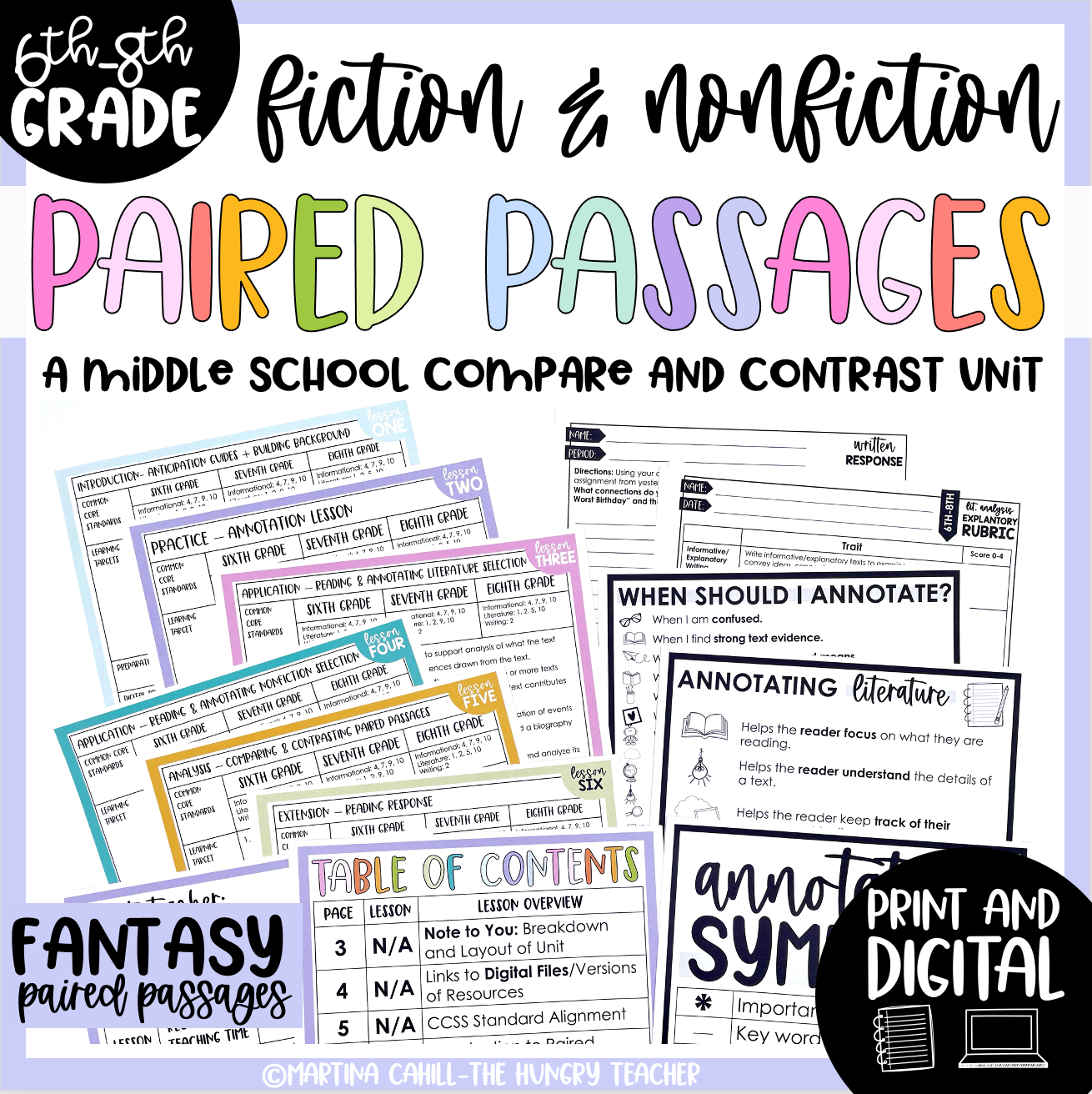
Bring meaningful text comparison and deeper thinking into your ELA classroom with this Middle School Paired Passages Mini-Unit. Students read both fiction and nonfiction texts on a shared topic (fantasy), practice annotation strategies, and analyze how different types of texts present ideas. Along the way, they build strong close reading, comparison, and evidence-based writing skills—culminating in a written response that connects both texts.
Designed to be simple, structured, and easy to implement, this unit includes clear pacing, low-prep teacher guidance, and both print and digital materials.

📌 Resource Snapshot
- Grades: 6th, 7th, 8th
- ELA Standard Strands: Literature, Informational Reading, Writing
- Total Lessons: 6 structured lessons
- Daily Lesson Time: 30–60 minutes
- Unit Duration: 1–2 weeks (flexible pacing)
- Low Prep: Mostly copies
- Digital & Print: Yes
- Hub Collection: April 2025
✅ What’s Included
- Comprehensive Teacher Implementation Guide
Clear pacing, lesson flow, and step-by-step guidance so you can confidently teach paired passages without overplanning. - Paired Fiction & Nonfiction Texts
Engaging passages that allow students to explore a shared topic through different text types. - Annotation Tools & Guides
Student-friendly annotation symbols, practice pages, and guided strategies to help students interact with texts in a meaningful way. - Close Reading & Analysis Activities
Structured worksheets that guide students through understanding, analyzing, and comparing both passages. - Compare & Contrast Graphic Organizers
Clear tools that help students organize similarities and differences across texts. - Written Response Assignment + Rubric
A final writing task where students connect both texts and support their thinking with evidence. - Digital Versions
Google Slides and digital student pages for easy use with Google Classroom.
✨ Here’s What Students Will Learn
- Understanding Paired Passages
Learn how fiction and nonfiction texts can connect through shared topics and ideas. - Annotation Strategies
Use simple, repeatable annotation tools to track thinking, questions, and key details while reading. - Close Reading Skills
Identify important details, make inferences, and understand how each text works. - Comparing Texts
Analyze similarities and differences in how authors present ideas across genres. - Evidence-Based Thinking
Use specific evidence from both texts to support ideas. - Written Response Skills
Write a clear, structured response that connects both passages.
💡 Why This Works
Paired passages give students a clear purpose for reading and thinking beyond one text. By comparing fiction and nonfiction, students deepen their understanding while practicing essential reading and writing skills. The structure keeps everything manageable, while still pushing students to think critically and use evidence.
🎯 Perfect For
- Introducing paired passages and building background knowledge
- Teaching annotation strategies with guided practice
- Supporting close reading of both literature and nonfiction
- Helping students compare and analyze texts across genres
- Strengthening evidence-based reading responses
- Reinforcing key reading and writing skills in a short, structured unit