Holes by Louis Sachar Novel Study
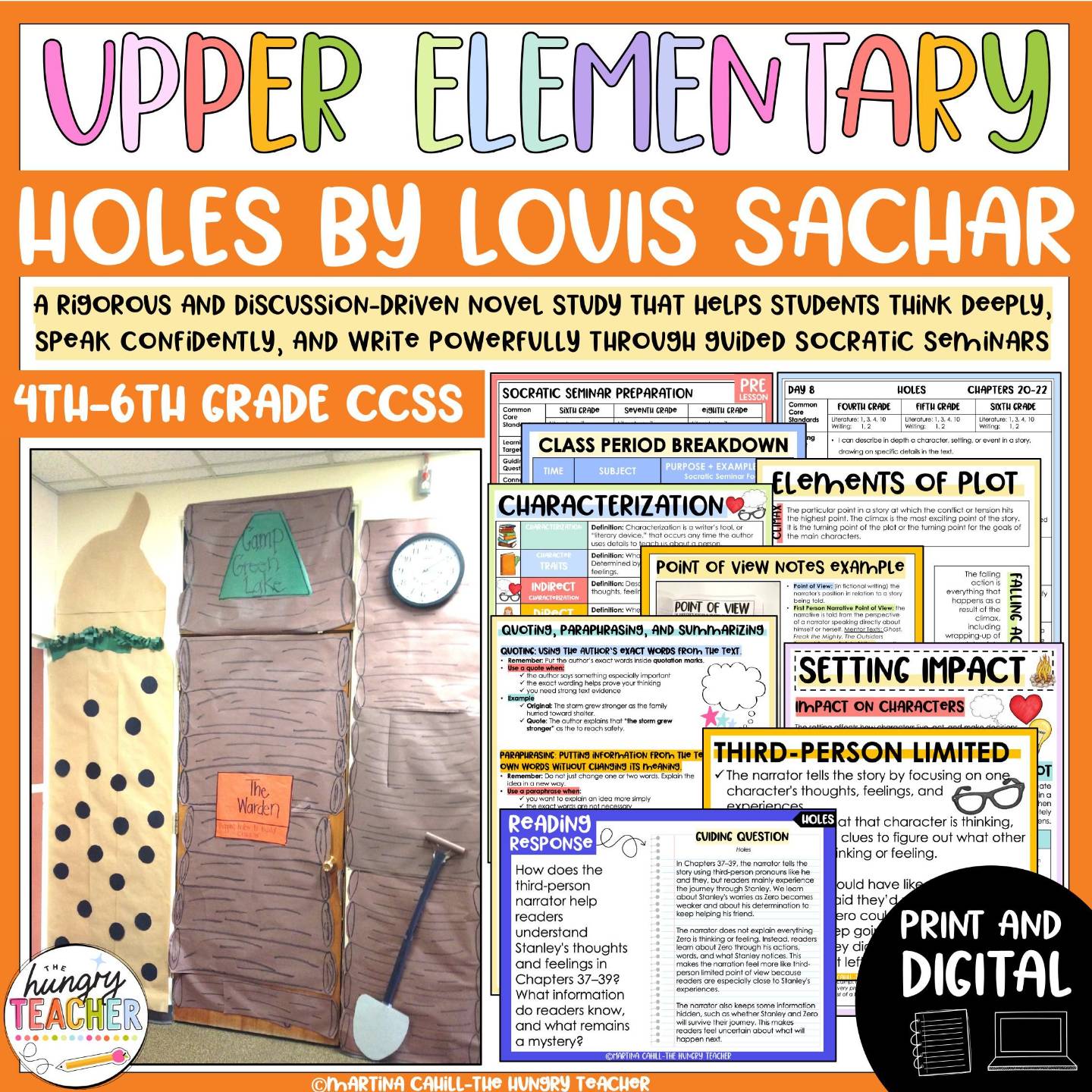
Teach Holes by Louis Sachar with a complete 4th–6th grade novel study featuring 22 standards-aligned reading lessons, Socratic Seminars, literary devices instruction, and ready-to-teach activities. This fully updated reading unit helps students analyze literature, discuss complex ideas, and write stronger text-based responses while exploring one of the most engaging novels for upper elementary ELA.

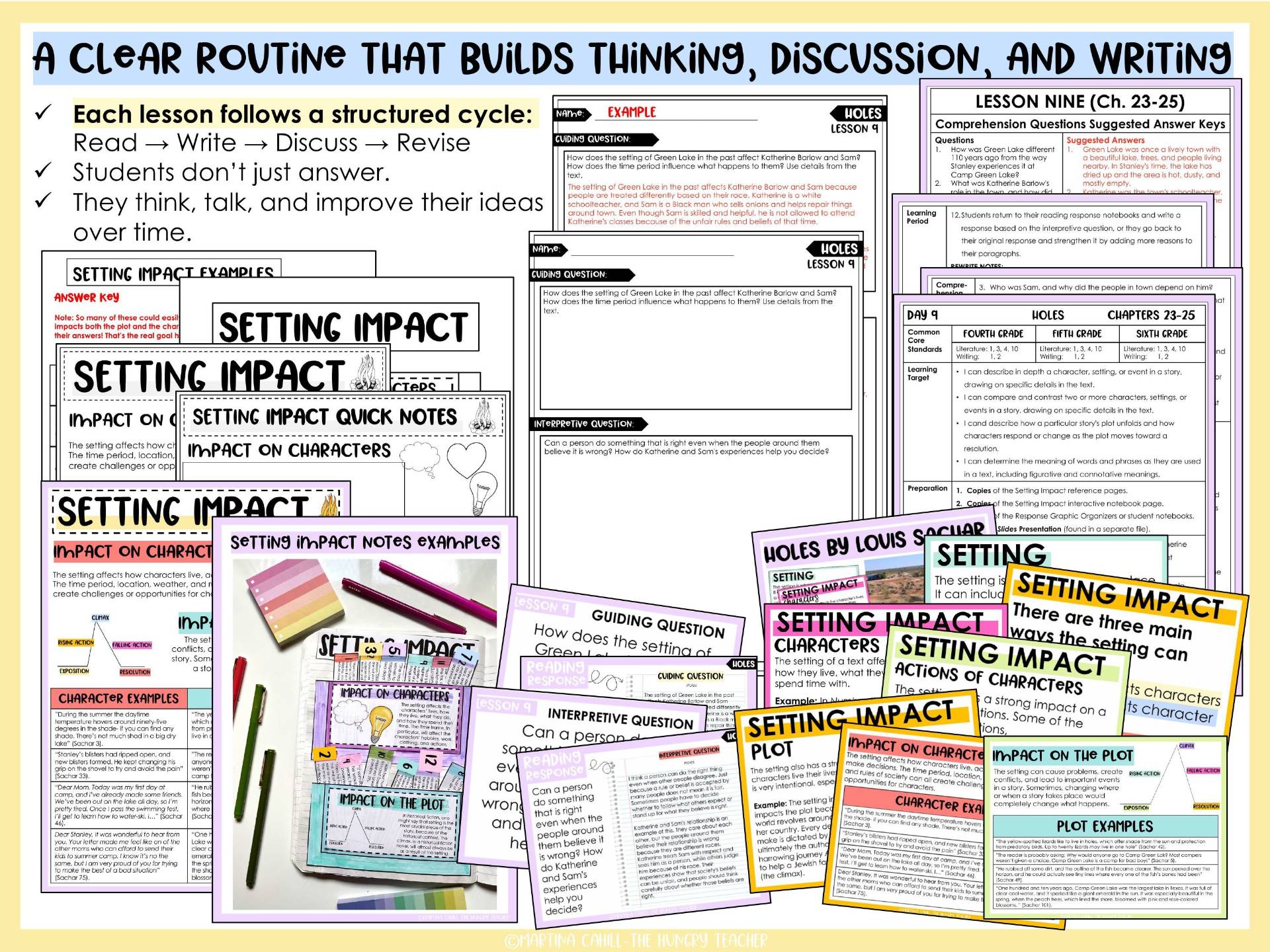
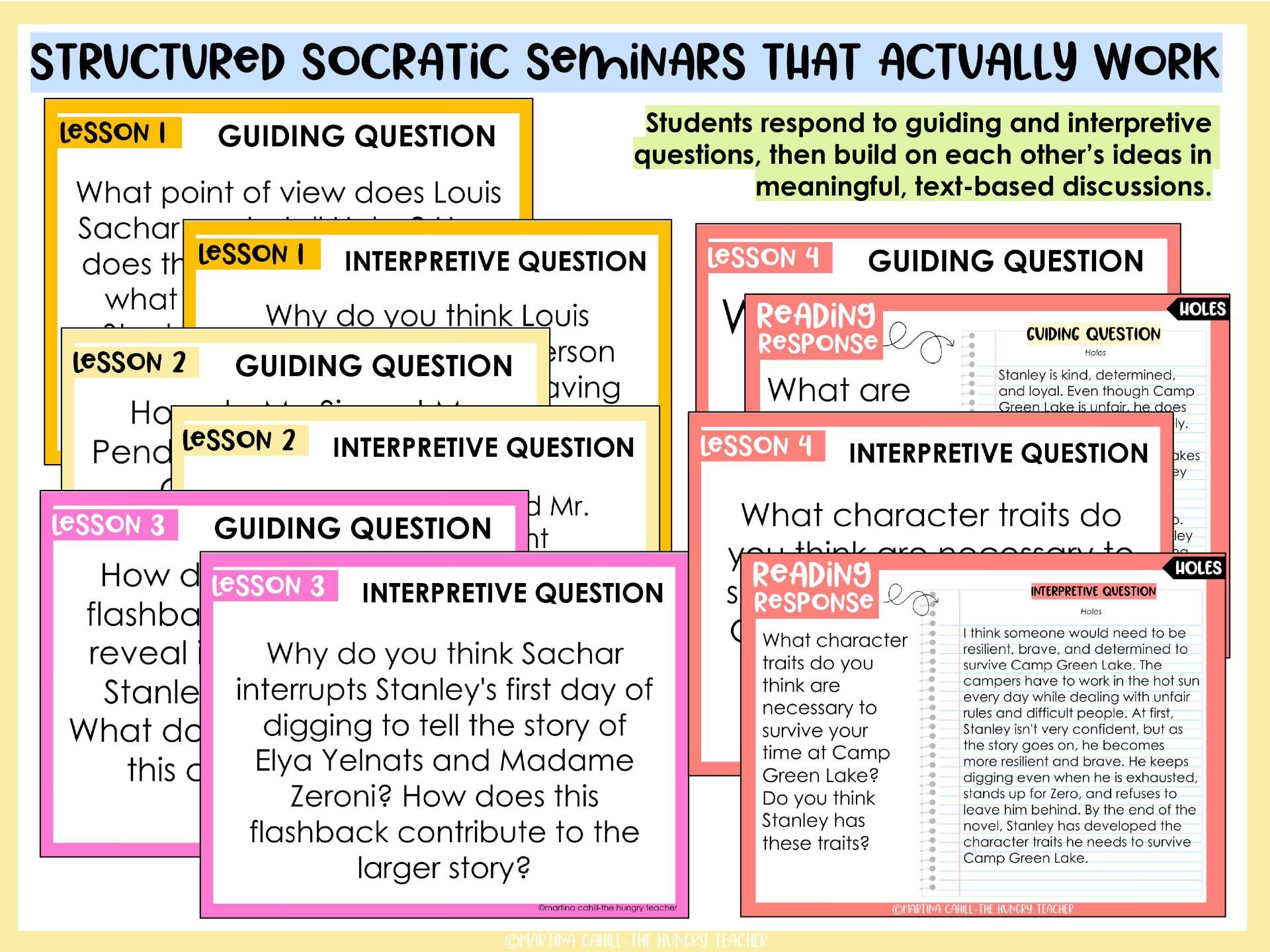
Built around a simple, repeatable structure—read → write → discuss → revise—this Holes novel study brings together explicit reading instruction, guiding and interpretive questions, structured Socratic Seminars, and meaningful writing. Students read with a purpose, develop their thinking through written responses, discuss their interpretations with classmates, and return to their writing to strengthen their ideas.
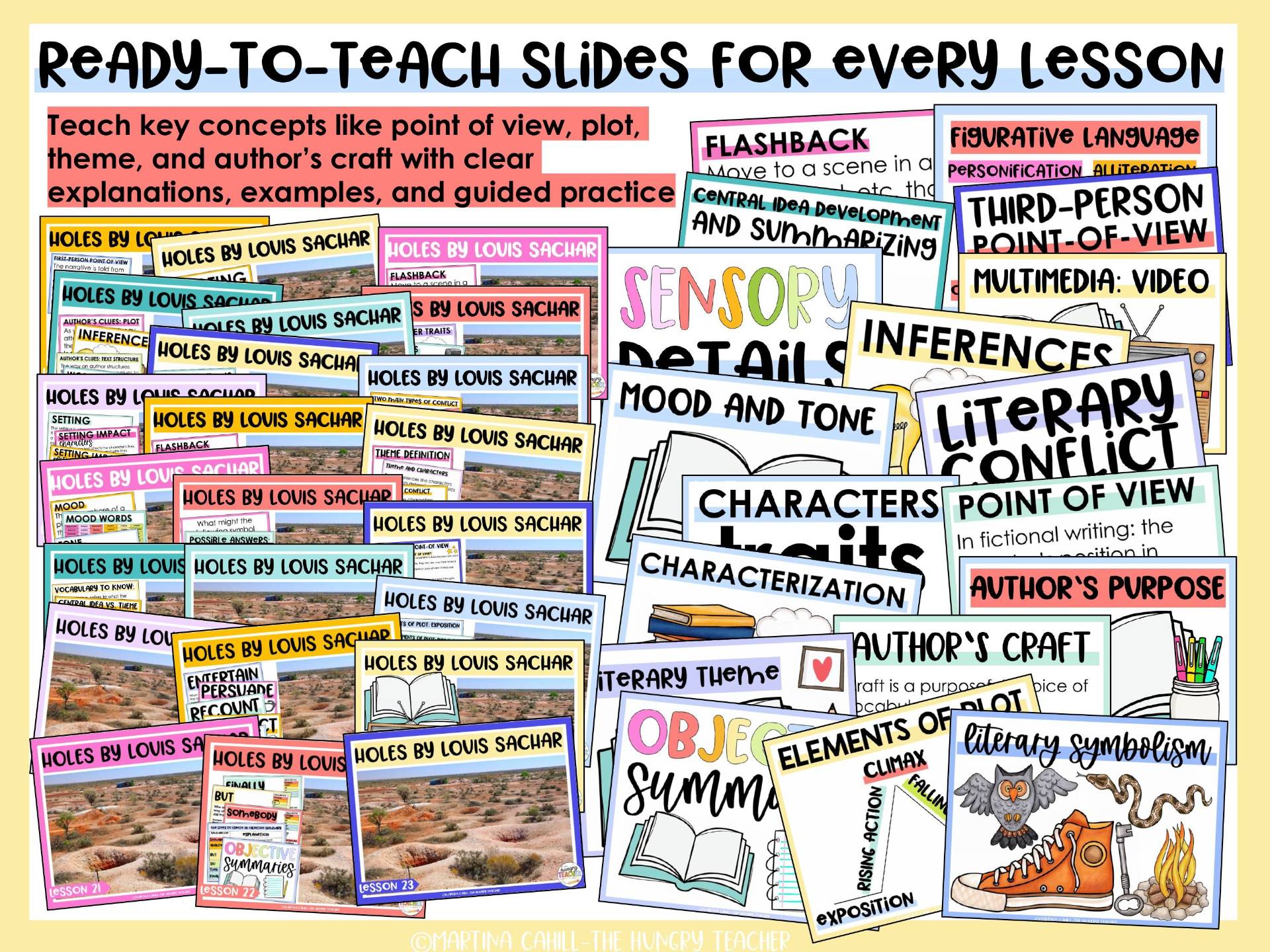
Instead of spending the entire novel answering comprehension questions about what happened, students use Stanley and Zero's experiences to dig into point of view, citing textual evidence, flashbacks, character traits, characterization, inferences, figurative language, conflict, setting, author's craft, theme, mood and tone, symbolism, plot, text structure, author's purpose, and more.
What makes this unit different:
- Students focus on strong guiding and interpretive questions that give them something meaningful to think, write, and talk about rather than completing endless chapter worksheets.
- Students don't just write a response and move on. They discuss their interpretations with classmates and then return to their writing to revise and strengthen their ideas.
- You're not just getting through Holes. You're using the novel to teach students how to analyze literature, support their thinking with evidence, discuss complex ideas, and write stronger responses.
- The same read → write → discuss → revise structure repeats throughout the unit, so students know what to expect without every chapter turning into another packet.
- You still have comprehension questions, suggested answer keys, and vocabulary when you need them, without making basic comprehension the focus of every class period.
What's Included:
- 22 complete Holes reading lessons + a final project
- Structured, step-by-step lesson plans with standards, learning targets, preparation, pacing, guiding questions, interpretive questions, and teaching support
- Ready-to-teach lesson slides for every lesson and the final project
- Guiding questions that give students a clear purpose for reading and writing
- Interpretive questions designed for deeper analysis and Socratic Seminar discussions
- Example written responses for guiding and interpretive questions so you can model what strong literary analysis and writing look like
- Comprehension questions with suggested answer keys
- Vocabulary suggestions and student-friendly definitions
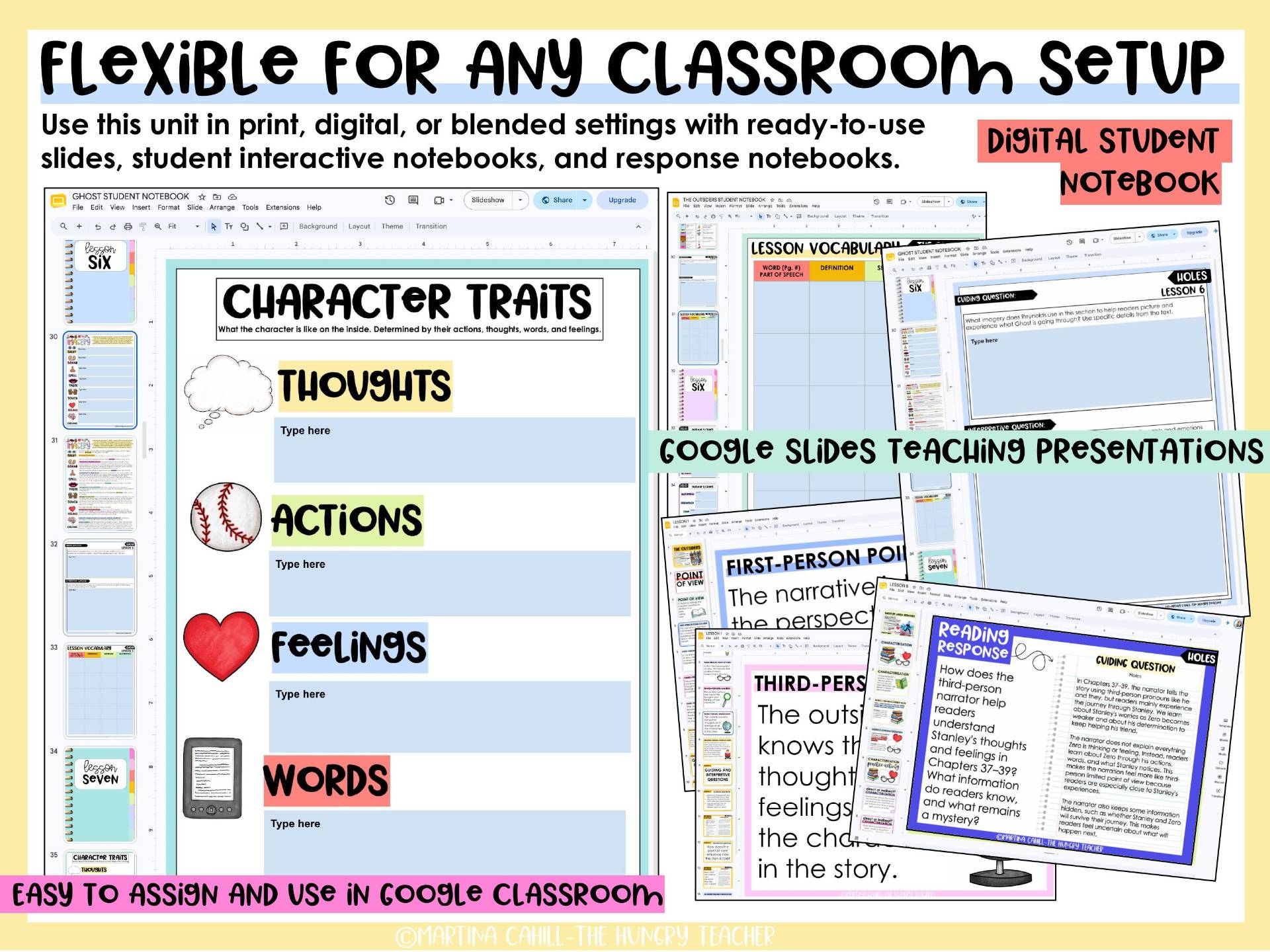
- Digital and printable student reading response notebooks
- Literature reference pages, quick notes, and interactive notebook activities for the reading concepts taught throughout the unit
- Reading response graphic organizers for analyzing literature and supporting interpretations with evidence
- Editable, differentiated reading response rubrics for 4th, 5th, and 6th grade
- Complete Socratic Seminar implementation support with norms, pacing, examples, and classroom routines
- Small-group and individual reading conference forms
- Fourth–sixth grade Common Core standards alignment built directly into the lessons
- Printable and digital resources for flexible classroom use
The unit is intentionally designed so the literature instruction, discussion, and writing work together. Students learn the reading concept, apply it while reading Holes, respond to a guiding question, discuss a deeper interpretive question with their classmates, and use those conversations to revise or extend their writing.
The 24 Lessons Are:
- Pre-Lesson: Socratic Seminar Norms
- Day 1, Chapters 1–3: Point of View
- Day 2, Chapters 4–6: Quoting and Citing Textual Evidence
- Day 3, Chapter 7: Flashbacks
- Day 4, Chapters 8–10: Character Traits
- Day 5, Chapters 11–13: Characterization
- Day 6, Chapters 14–16: Making Inferences
- Day 7, Chapters 17–19: Figurative Language
- Day 8, Chapters 20–22: Conflict
- Day 9, Chapters 23–25: Setting and Its Impact on the Story
- Day 10, Chapters 26–28: Author's Craft
- Day 11, Chapters 29–30: Theme
- Day 12: Mood and Tone
- Day 13: Symbolism
- Day 14: Third-Person Point of View
- Day 15: Theme and Characterization
- Day 16: Text Structure
- Day 17: Plot
- Day 18, Chapters 48–49: Making Connections Across Timelines
- Day 19, Chapter 50: Author's Purpose
- Day 20: Comparing the Book and Movie
- Day 21: Comparing Texts (Grade-Specific RL.9 Lessons)
- Day 22: Objective Summaries
- Final Project
The lessons cover the novel from beginning to end, with additional opportunities to compare texts, analyze the film adaptation, write objective summaries, and demonstrate understanding through a final project.
Since the RL.9 standard is different in fourth, fifth, and sixth grade, I've included separate versions of that lesson so teachers can address the expectations for their specific grade level.
Throughout the unit, students repeatedly practice citing textual evidence, analyzing author choices, discussing interpretations, and using those discussions to strengthen their written responses. The standards are mapped by lesson for 4th, 5th, and 6th grade, making it easier to see where each reading literature skill is being taught and practiced.
Students also get the support they need without turning the novel into busywork. The modeled responses give you concrete examples to teach from, the reference pages and interactive notes provide explicit instruction, and the consistent Socratic Seminar routine gives students opportunities to hear other interpretations before revising their own writing.
Prep is quick and easy. Review the lesson plan, pull up the ready-to-teach slides, and print or assign the student materials you want to use. The teaching sequence, questions, examples, reference materials, and reading response support are already built for you.
There is no fluff and no busywork in my reading units. The goal isn't to prove that students read every chapter. It's to use a novel they actually want to talk about to help them become stronger readers, writers, and thinkers.
TEACHERS LIKE YOU SAID…
⭐️⭐️⭐️⭐️⭐️ Nicole D. says, "This was a great resource to help teach the book. The essential questions for each chapter are aligned with the standards. It kept students engaged and helped with planning."
⭐️⭐️⭐️⭐️⭐️ Hope D. says, "All of her novel studies are excellent--engaging, thought-inducing, and interactive. This one was no different, and Holes was our most beloved read all year. This novel study gave us a lot of fun discussion points."
⭐️⭐️⭐️⭐️⭐️ Katie H. says, "LOVE, anything that is put out by Martina AKA the Hungry Teacher is an amazing product. She puts in a lot of time into each thing she creates. These guides are amazing, she has done all the heavy lifting with questions, slides, visuals. I will continue to always Martina's Novel study guides with my students. The prep is easy, students can either write or do the questions digital."
⭐️⭐️⭐️⭐️⭐️ Colleen S. says, "I genuinely cannot say enough about how much I love these novel studies. Before I pick a new novel, I check these novel studies first to see if there is a unit for it. These are PERFECT for my students and we all love them. I cannot recommend it enough."
YOU MAY ALSO LIKE...
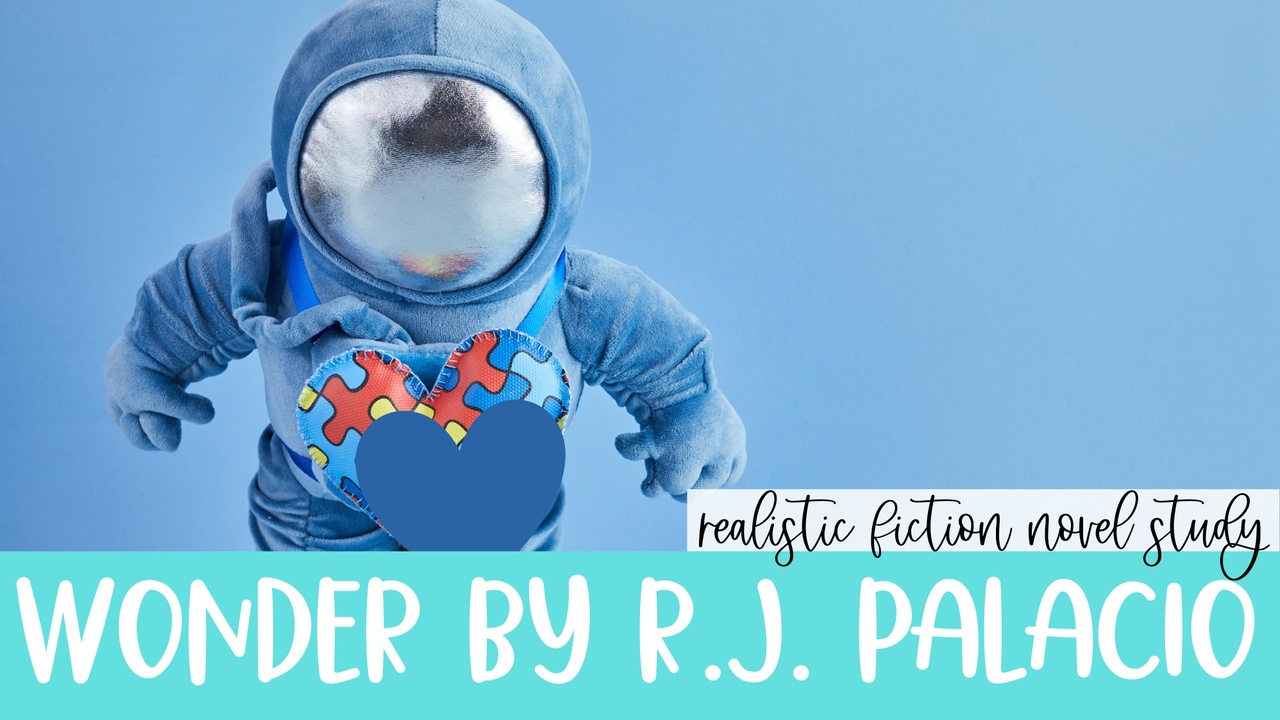
Wonder by R.J. Palacio | SHOP
Teaching literature concepts through Wonder by R. J. Palacio can be engaging, thought-provoking, and meaningful with this 22-lesson Socratic Seminar novel study. This realistic fiction reading unit helps your fourth, fifth, and sixth grade students think, discuss, and write about the novel while developing important reading literature and writing skills.
$12.00 USD
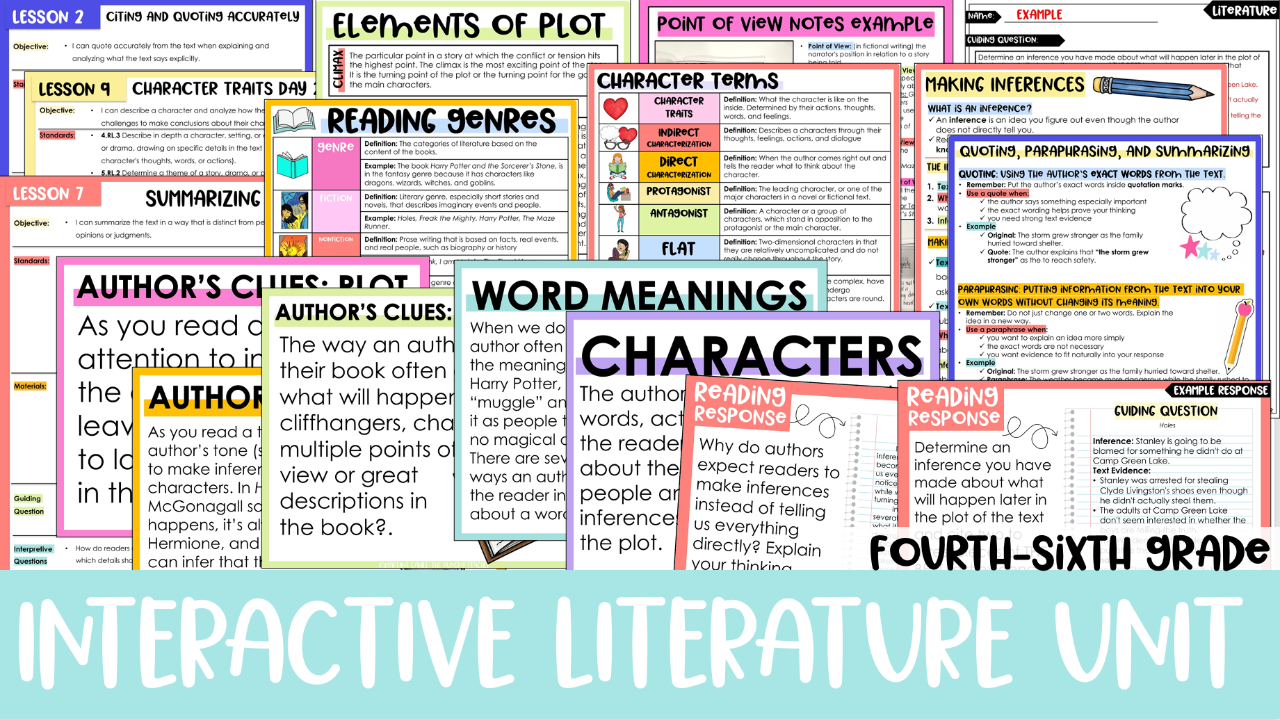
Upper Elementary Interactive Reading Literature Unit (4th-6th) | SHOP
In this digital literature unit and literature interactive notebook unit, you will have 24 lessons that teach all of the literature and fiction Common Core reading standards for 4th, 5th, and 6th grade. These lessons teach literary terms like theme, point of view, character traits, plot, mood, tone, etc.
$22.00 USD
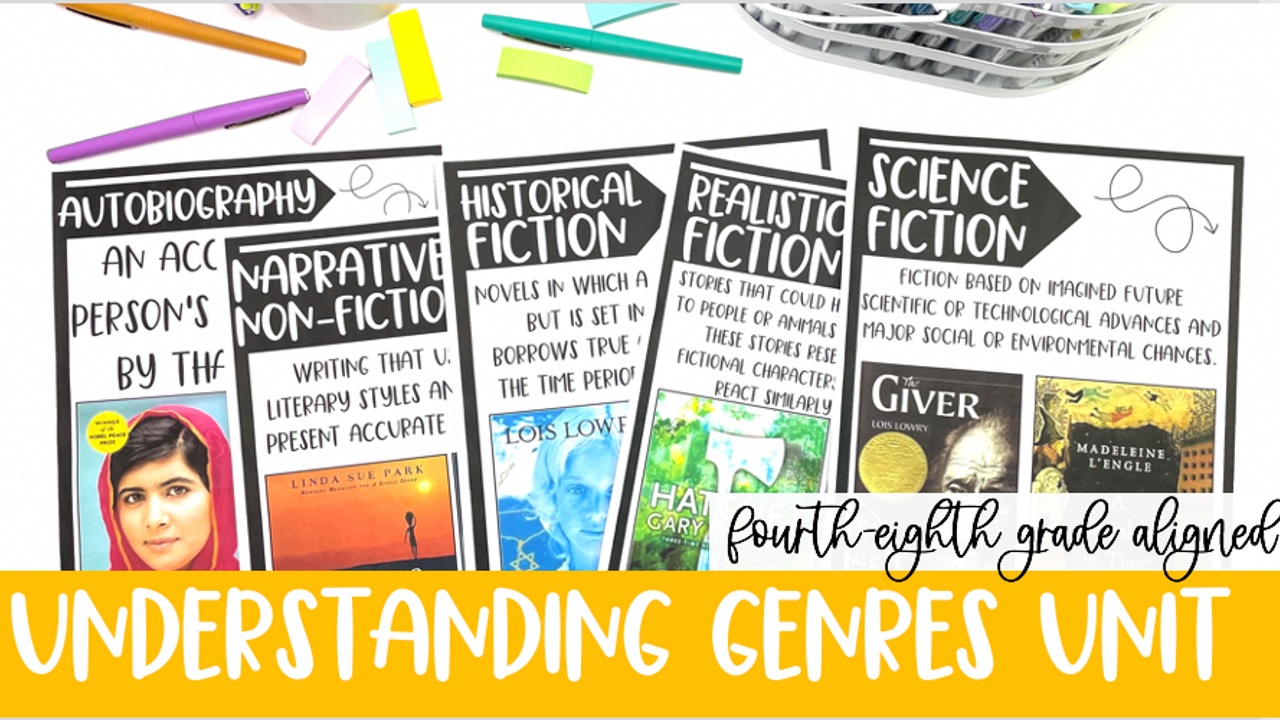
Reading Genres Interactive Notebook Unit | SHOP
This resource includes a printable and a digital reading unit to teach genres to middle school students. This genre reading unit includes reading response examples, mini lessons, interactive notebooks pages, genre reading posters, rubrics, and assessments.