UNTOLD STORIES PHOTOJOURNALISM PROJECT-BASED EXPOSITORY WRITING UNIT
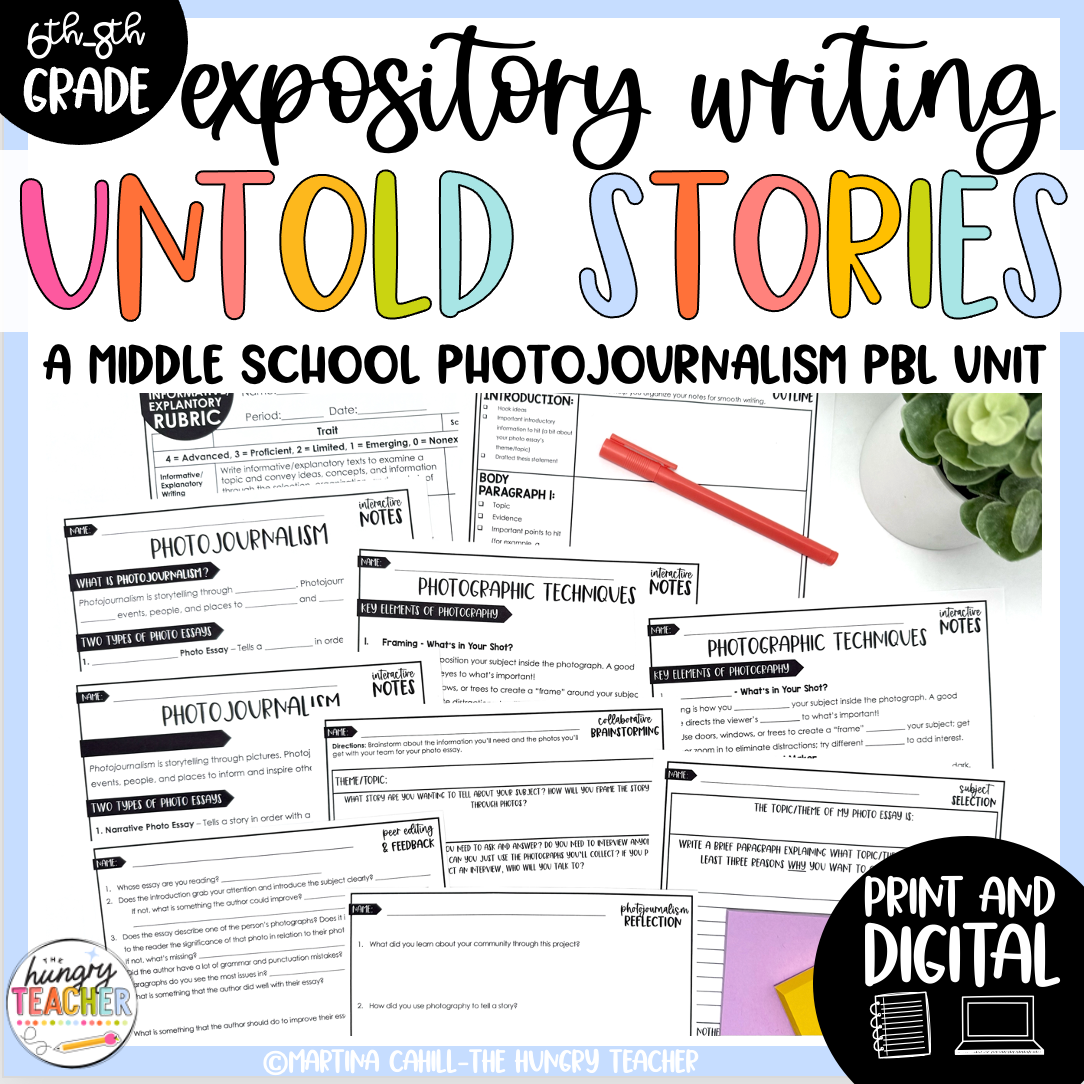
Empower students to tell meaningful stories with Untold Stories—a project-based learning unit for grades 6–8. Students blend research, photography, and expository writing as they investigate untold community narratives and showcase them through authentic photojournalism. Use it as a capstone project for expository writing or as a stand-alone exploration of journalism. Flexible pacing, scaffolded lessons, and both print/digital materials are included.

Resource Snapshot:
- Grades: 6th, 7th, 8th
- ELA Standard Strand: Expository Writing
- Total Lessons: 6
- Daily Lesson Time: 20-45 minutes
- Unit Duration: 1-2 weeks
- Low Prep: Mostly Copies
- Digital and Print: Yes
- Standards: W.2, W.4, W.5, W.7, W.8, W.9, RI.1, RI.2, RI.7, SL.1, SL.4, SL.5
- Hub Collection: October 2025
✅ What’s Included:
-
Six Scaffolded Lessons: Step-by-step lessons guiding students through researching, interviewing, photographing, and drafting expository pieces.
-
Teaching Slides: Ready-to-use Google Slides/PDFs modeling photojournalism techniques and expository writing skills.
-
Student Reference Pack: Anchor charts, research templates, photo analysis guides, interview question frames, and writing organizers.
-
Photojournalism Project Templates: Print/digital layouts for captions, sidebars, feature articles, and curated photo spreads.
-
Rubrics & Checklists: Clear success criteria for research, writing, and presentation phases to support self- and peer-assessment.
-
Review Game: Interactive activity reinforcing key expository and journalistic skills.
-
Showcase Tools: Gallery-walk/exhibit directions, peer feedback forms, and reflection pages for authentic publishing moments.
✨ Here’s What They’ll Learn:
-
Research & Inquiry: Gather and evaluate information from interviews, community sources, and multimedia.
-
Expository Writing: Develop clear central ideas, organize with logical structures, and integrate evidence effectively.
-
Photojournalism Skills: Use images intentionally to enhance meaning, pair photos with purposeful captions, and design spreads for clarity and impact.
-
Voice & Precision: Write with clarity, purpose, and audience awareness.
-
Presentation & Reflection: Share their projects in authentic settings and reflect on the storytelling process.
💡 Why This Works:
Students investigate real-world stories that matter to them. Combining photography with writing makes learning authentic, creative, and highly engaging—while still hitting rigorous ELA standards.
Perfect For:
-
Summative expository writing projects
-
Cross-curricular links with Social Studies/Media Arts
-
Student showcases, literacy nights, or community storytelling events